Girona is accessible by train; Besalú is the harder leg
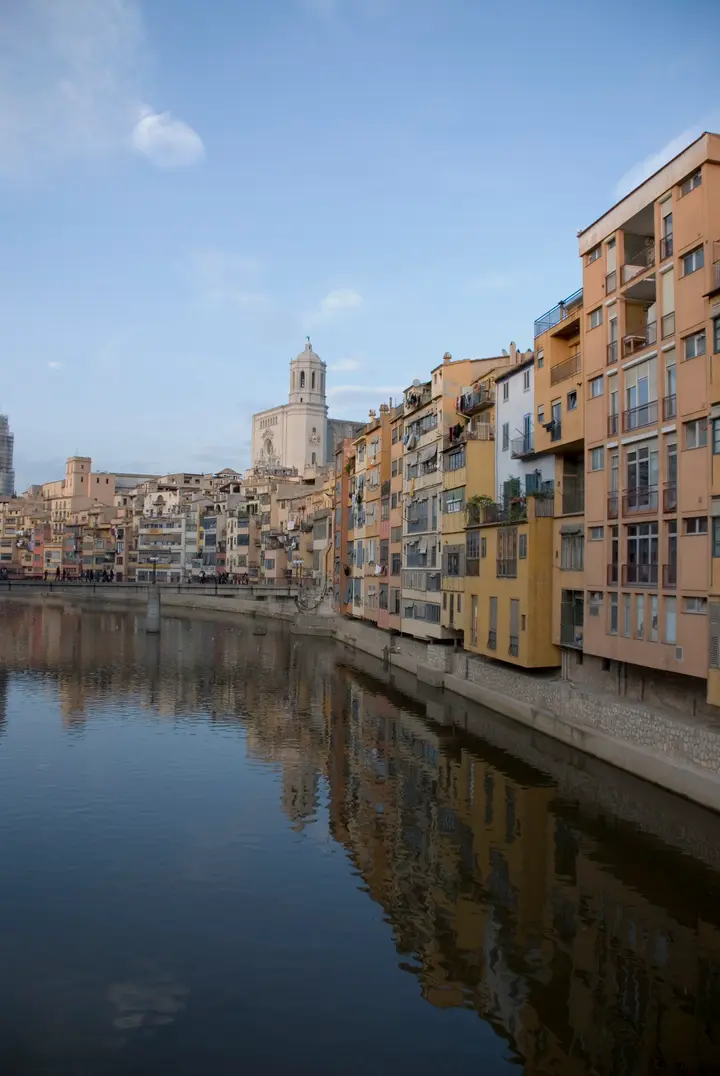
Girona, around 100 kilometers northeast of Barcelona, is a lively small city with a medieval core, cathedral steps, Jewish quarter and colorful riverside facades. Besalú is a small preserved medieval town farther inland in La Garrotxa, best known for a long arched stone bridge. The two destinations look good together in photographs, but they require different transport methods.
If you have only one day and prefer independent travel, a full Girona visit is simple and rewarding. Adding Besalú is possible only when a suitable local bus connection and return service fit your schedule. A private tour saves planning and may include extra villages, but the additional stops reduce time spent wandering Girona’s historic center.
Barcelona to Girona by rail
Girona City Council confirms that its central Adif station hosts regional, national and high-speed rail services on the line linking Barcelona with the French border. Compare a fast train from Barcelona Sants with a slower regional option for your specific date and ticket budget. Not every fare offers the same flexibility, and a high-speed ticket often belongs to a particular departure.
From Girona’s station the historic core is walkable, but allow time to reach the bridge over the Onyar and climb into the older streets. The station is not next to Girona Cathedral’s steps. If you are traveling with large luggage, consider station storage or your lodging arrangements rather than carrying bags through the steep medieval lanes.
The first historic walk: Onyar houses and Eiffel Bridge
Begin along the River Onyar, where pastel-colored facades make Girona instantly recognizable. Pont de les Peixateries Velles, often called the Eiffel Bridge, is a convenient crossing for photos and provides a view of the tightly packed riverside buildings. It is a public bridge, not a paid attraction or a place where you need a guide to enjoy the scenery.
Walk toward Rambla de la Llibertat and Plaça de la Independència if you want cafe stops, shops and a slower introduction. Girona is more than a film location: its river crossings and lively central squares still serve local residents. Do not block narrow bridges for long photo sessions or assume every beautiful staircase belongs to a publicly accessible museum.
Girona Cathedral and the Jewish Quarter
The official tourist office describes the old Call as one of the best-preserved historic Jewish quarters, with narrow lanes and stairways along Carrer de la Força. Beside it, Girona Cathedral has a striking broad Gothic nave, celebrated for its 23-meter vault span and monumental front steps. Cathedral admission, religious events and seasonally varying opening hours should be checked before booking an entry.
The area is genuinely hilly. Girona City Council’s accessibility notes describe many uneven cobbled surfaces and gradients of roughly eight to twelve percent in parts of the old quarter. A stroller or wheelchair user can still enjoy lower riverside areas, but should not assume the cathedral steps, ancient walls or Jewish-quarter alleys are easy routes. Look up accessible cathedral entry arrangements in advance.
Old walls, Arab Baths and what to prioritize
Parts of Girona’s medieval defenses are walkable, offering views above the old town and surrounding hills. Access points include stairs, and wall-walk conditions can change during bad weather or maintenance. The historic Arab Baths and Sant Pere de Galligants are alternative stops for visitors interested in medieval building styles, but do not treat the entire complex as one admission ticket.
A satisfying Girona-only day might include a morning river walk, cathedral and Call, lunch in town, then a wall section or museum before taking a late train back. This is more relaxed than chasing bus transfers. If you want to see local crafts and eat slowly, spend your entire day here and save Besalú for another trip.
Girona to Besalú by TEISA bus, not by rail
The town council of Besalú confirms that the nearest rail stations are in Girona, Figueres and Ripoll and directs bus travelers to TEISA. Regional tourism information lists TEISA services connecting Girona through Banyoles and Besalú toward Olot. In other words, there is no train that drops you at Besalú’s medieval bridge.
Before leaving Barcelona, search the specific weekday’s TEISA timetable, Girona departure stand, Besalú stop and last usable return bus. A one-way connection may be straightforward but the return journey can limit your time. Carry a screenshot of stop names and consider holiday variations; an attractive train timetable from Barcelona cannot fix a missed rural bus.
Besalú on foot: the seven-arched bridge and old lanes
Besalú’s emblem is Pont Vell, the stone bridge with seven arches and a defensive tower leading toward its medieval center. Costa Brava Girona tourism recommends its churches, former monastery and the Jewish bath heritage. The outdoor bridge approach and stone streets can be enjoyed without paying for a private tour, although particular museums and guided heritage spaces have their own conditions.
Cross the bridge slowly, explore the narrow lanes, then take time for Sant Pere and Sant Vicenç if the sites are open. A brief cafe stop is more pleasant than a rushed bridge photograph followed by an immediate return bus. Respect private entrances and check whether any Mikveh or Jewish heritage interior can be visited only on guided access.
A combined Girona-and-Besalú itinerary
A feasible independent outline is a morning fast train from Barcelona, two to three focused hours in Girona’s old town, a confirmed TEISA bus onward, a leisurely hour or two in Besalú and a preplanned return by bus to Girona before the final rail connection to Barcelona. The feasibility depends entirely on your date and the bus’s actual operating schedule.
That outline excludes extensive museum visits in Girona. If your bus connection creates long waits, stay longer in Girona instead of claiming every traveler can combine both with equal ease. If the trip is principally about medieval architecture rather than detailed museum time, a private vehicle or guided group day may be a cleaner option.
How the private tour differs from public transport
One GetYourGuide listing offers a seven-hour private Girona and Besalú tour from Barcelona, with guided visits and transport arranged. Its page presents a private-group booking and bottled water, not a cheap seat on a shared public coach. Before paying, confirm where pickup occurs, the languages available, exactly how long you spend in each town and whether any admission fees are included.
Private transfer may suit small groups sharing a vehicle or families with tight schedules. Solo and budget travelers will often save by choosing Girona independently and using TEISA only if the timetable aligns. Some other products advertise Girona plus Figueres or Costa Brava instead of Besalú; a similarly named Catalonia tour is not a substitute if crossing Besalú’s bridge is the main purpose.
Food, families and seasonal crowds
Girona has excellent cafes and Catalan food across both the old center and new town; restaurant prices are not tied to the cathedral ticket. Besalú offers a quieter village setting but can become crowded on holiday afternoons. In hot weather, carry water and plan shaded breaks. Rain makes the stone lanes and stepped cathedral approaches slower and potentially slippery.
Families should choose either a shorter museum visit or the rural bus extension instead of packing every attraction into one day. Travelers with limited mobility will find some lower parts of Girona easier than steep lanes and historic walls. The broad river views and Besalú bridge approaches may still provide a memorable visit without entering inaccessible interiors.
Before booking or departing
Confirm the precise Barcelona train station, Girona station arrival, any high-speed ticket restrictions, the TEISA bus line and the last return connection. Save both the Girona city map and Besalú stop. For a private trip, confirm included transport, guide versus driver, entrance fees, cancellation and actual meeting point.
The affiliate option below is an optional provider-operated private excursion; it does not replace public railway or bus services. Korea Waynote may earn a commission from qualifying reservations, but cannot guarantee date availability or a specific operator timetable.
Verify with official sources
Verify admission conditions, route changes, closures, prices and eligibility with the current providers. Editorial links are references; affiliate links above are labeled separately.
Girona City Council — how to arrive by trainGirona City Council — historic city sightsGirona City Council — Jewish QuarterBesalú town council — reaching Besalú by bus or railCosta Brava Girona Pyrenees — Besalú visitor informationTurisme Gironés — TEISA 9 and 10 regional bus routes