Why these two Italian hill towns are not an easy DIY pair
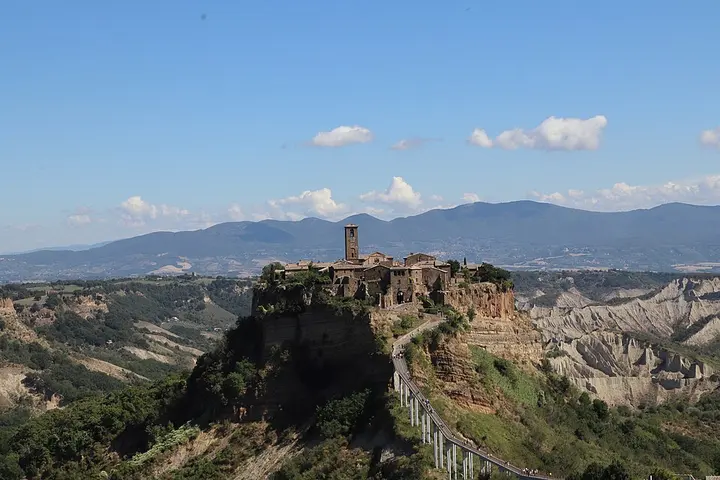
Orvieto rises on volcanic rock in Umbria, with an elaborate cathedral, old stone streets and subterranean history. Civita di Bagnoregio is a tiny hilltop village in neighboring Lazio reached by an exposed pedestrian bridge. Photographs make them look like neighboring stops on one scenic circuit, but there is no simple, frequent urban shuttle that links both for an effortless Rome day.
Orvieto alone can make an excellent independent rail day trip from Rome. Adding Civita requires additional local transport planning or a private vehicle. For visitors with limited mobility, vertigo or a strict evening return to Rome, the combined itinerary deserves special caution; an ordinary train ticket to Orvieto does not solve the final journey to Civita.
Rome to Orvieto by train: pick the correct destination
Trenitalia operates rail services between Rome and Orvieto, with duration varying by specific regional or intercity train and origin station. Search the timetable for your chosen date and avoid booking the latest possible return if you plan a paid underground tour. Orvieto railway station sits below the historic hill at Orvieto Scalo, not beside the cathedral.
The official cathedral access guide explains the link from the station to the plateau by funicular or local bus. Once up on the historic level, you still walk across the old city toward Piazza del Duomo. If carrying luggage or traveling with a stroller, plan for stairs, paving and the uphill distance; avoid assuming a scenic hill town is flat once you arrive.
The Orvieto funicular and the important 2026 disruption notice
Trenitalia advertises an integrated Orvieto Link ticket combining regional train travel and the funicular to Orvieto Centro. Its published guidance normally shows frequent daytime funicular departures and an added one-way link fare. The linked ticket may require collecting a magnetic access pass from the station ticket office, including for the return, so read the operator’s conditions rather than expecting a QR code to open every gate.
Important: the municipality announced a funicular maintenance shutdown in June 2026 and subsequently reported an extension with replacement buses until works were completed. Do not assume the funicular is operating simply because an evergreen ticket page still displays a normal timetable. Check the most recent Comune di Orvieto or Busitalia service notice for your exact travel day and use the announced station-to-Piazza-Cahen replacement shuttle if applicable.
Explore Orvieto: cathedral, town center and St Patrick's Well
Orvieto’s cathedral is a major reason to stay longer than a quick coffee stop, with a striking Gothic facade and a richly decorated interior. Tickets and any attached exhibitions should be checked at the official Opera del Duomo site. You can enjoy the exterior and Piazza del Duomo without purchasing every associated museum ticket.
Near the station-side upper town, St Patrick’s Well offers a distinctive double-helix stairway and viewpoint into an engineering monument. Its long stepped descent and ascent are not suitable for everyone. Alternate choices include the Torre del Moro area, local craft streets and terrace views; select paid interior experiences based on opening hours and how much walking your group can comfortably handle.
Underground Orvieto is a different ticket and experience
Orvieto’s underground sites give visitors a sense of how people excavated and used the tuff rock below the plateau. An organized underground visit may cover chambers, passages and wells with access restrictions that vary by operator. Do not assume every subterranean area is included in a cathedral pass or that it is suitable for travelers uncomfortable with tight spaces.
Reserve a specific timed tour if underground history is your main interest, and leave sufficient time between that and your return train. If you prefer food and scenery, you can spend a full afternoon along the historic lanes, sampling local Umbrian dishes without a guided admission at all. This flexibility is the strongest argument for a Rome-to-Orvieto independent trip.
Civita di Bagnoregio: the bridge is the main access challenge
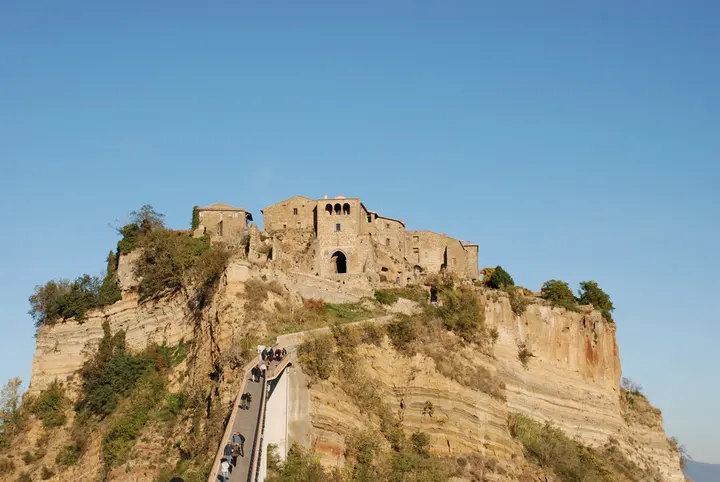
Lazio’s official tourism organization describes Civita as a village perched above eroded badlands, accessible only on foot across a footbridge. The final approach is not a drive-up hotel entrance: even if a driver brings you near the access point, you must allow walking time and negotiate the bridge and slope. A person afraid of heights may prefer the panoramic view from a belvedere rather than crossing.
Respect that Civita is a living village, not an outdoor movie set. Stay on signed public routes and avoid entering residential doorways for photographs. Admission rules and fees may be set locally; check the current official Bagnoregio visitor information instead of assuming an online tour ticket includes the separate village access ticket.
Independent connection from Orvieto to Civita: confirm each bus
Local transport between Orvieto and Bagnoregio exists in the broader regional network, but a convenient direct tourist service should not be assumed on every day. The route may require a change or a longer connection, and Bagnoregio itself is distinct from the Civita footbridge. The final approach must be arranged separately and may involve more walking or a local shuttle if operating.
If attempting this independently, check a specific departure and return itinerary with the local operator or tourism office before you leave Rome, including Sunday or holiday frequency. Confirm where the bus drops you and whether the connection back to Orvieto lets you reach your train. If you cannot verify those legs, make Orvieto the main day trip and save Civita for another occasion.
Private Rome tour: what you actually pay to simplify
GetYourGuide lists a private Rome departure combining Orvieto and Civita di Bagnoregio over roughly eight hours with an English-speaking driver and private vehicle. It includes two scenic town stops and walking time, but the product page describes a driver rather than guaranteeing a licensed guided tour inside each monument. Private pickup and drop-off can remove the most uncertain part of the public-transport connection.
The trade-off is price and time. A private vehicle can be expensive for a solo traveler and more defensible for a group splitting the total; it still cannot eliminate Civita’s bridge walk or automatically grant paid-site access. Check whether cathedral admissions, lunch, village access, hotel pickup and any local guide are included before purchase.
A realistic Orvieto-only itinerary from Rome
Illustrative independent plan: take a morning train from Rome, verify whether the funicular or replacement shuttle is running, walk to the cathedral area and spend the late morning on its artwork and streets. Have lunch in Orvieto, then choose either an underground tour or St Patrick’s Well before heading toward the station with a substantial connection buffer.
This is intentionally a full Orvieto day rather than a rushed attempt to reach Civita. A traveler arriving by car could add Civita if the driving time and parking arrangements fit, but parking is outside the pedestrian village itself. Check weather and local road restrictions; reaching the outskirts is not the same as entering the town.
A combined itinerary: best treated as a dedicated vehicle day
For a combined trip, depart Rome early with confirmed vehicle arrangements. Visit Orvieto’s cathedral square first or second according to opening hours, then continue to Civita for the belvedere, bridge and village walk. Keep optional museum entries limited rather than stacking every paid attraction into a day already involving road transfers and an exposed climb.
For travelers wanting atmosphere over a checklist, stay one night in Orvieto and organize the Civita visit the following day. This allows you to explore the town after daytime groups leave and reduces the risk that bus uncertainty consumes the only hours set aside for the village. The choice is not simply 'private is better' but whether your group values certainty more than the higher price.
Weather, bridge safety and practical final check
High winds, heavy rain, heat or slippery paving can turn Civita’s bridge into the least comfortable part of the trip. Visitors afraid of heights or unable to walk slopes should be cautious before paying for a tour whose main appeal is crossing that bridge. Ask a tour operator about pace, walking difficulty and any alternative viewing arrangements; the official visitor destination information is the best starting point.
Before leaving, verify Trenitalia service status, the current Orvieto funicular or replacement-bus notice, official cathedral hours, Orvieto local transport, village admission arrangements and your operator’s cancellation terms. The linked private tour is an optional third-party affiliate product. Korea Waynote does not sell tickets, control schedules or promise that every attraction is accessible on your date.
Verify with official sources
Verify admission conditions, route changes, closures, prices and eligibility with the current providers. Editorial links are references; affiliate links above are labeled separately.
Trenitalia — official Orvieto Link train and funicular informationComune di Orvieto — June 2026 funicular service extension noticeOrvieto Cathedral — official directions and ticket informationVisit Lazio — Civita di Bagnoregio visitor informationVisit Lazio — Civita historic bridge and UNESCO candidacy