2026 INAH admission: resident ID matters more than tour choice
Teotihuacán admission is sold by INAH. Your nationality/residency documentation determines the official fee; none of these tickets grants pyramid-climbing permission.
| Option | 2026 price | What it includes | Important limits |
|---|---|---|---|
| Foreign visitor, nonresident | MXN 210 | Archaeological grounds and listed site museums | Sun Pyramid climbing forbidden; Moon access restricted |
| Mexican national / documented resident | MXN 105 | Same public archaeological access | Must present qualifying current government ID |
| Qualifying Mexican/resident Sunday | Free admission | Listed archaeological zone admission exemption | Valid eligibility and documentation required |
| Two international adults | MXN 420 | Two regular admissions | Bus, guide, meals and balloon experiences extra |
| Two eligible residents | MXN 210 | Two documented resident tickets | Proof of residency, not spoken Spanish |
Frequently asked before visiting
Can I still climb the Pyramid of the Sun in 2026?
INAH's current visitor guide prohibits climbing the Sun Pyramid. The April 2026 operational notice also closed access to the Moon Pyramid pending further notice.
Are Sundays free for every foreign tourist?
No. The official free Sunday category applies to qualifying Mexican nationals and residents with acceptable proof. Other exemptions have their own eligibility requirements.
Where do ordinary buses depart in Mexico City?
INAH lists Terminal de Autobuses del Norte. Check the correct archaeological-zone service and return terminal; it may make intermediate stops.
Does the MXN 210 ticket include a balloon ride?
No. INAH admission includes its archaeological zone and listed museums, while commercial balloon rides and tour transportation are separate products.
Official operator facts and separate traveller experiences were compared. Reviews reflect individual experiences, not guaranteed current conditions. Check your exact date before paying. INAH official admission and travel conditions Visitor bus confusion and reassurance, February 2026
The pyramids are magnificent, but climbing them is not part of the ticket
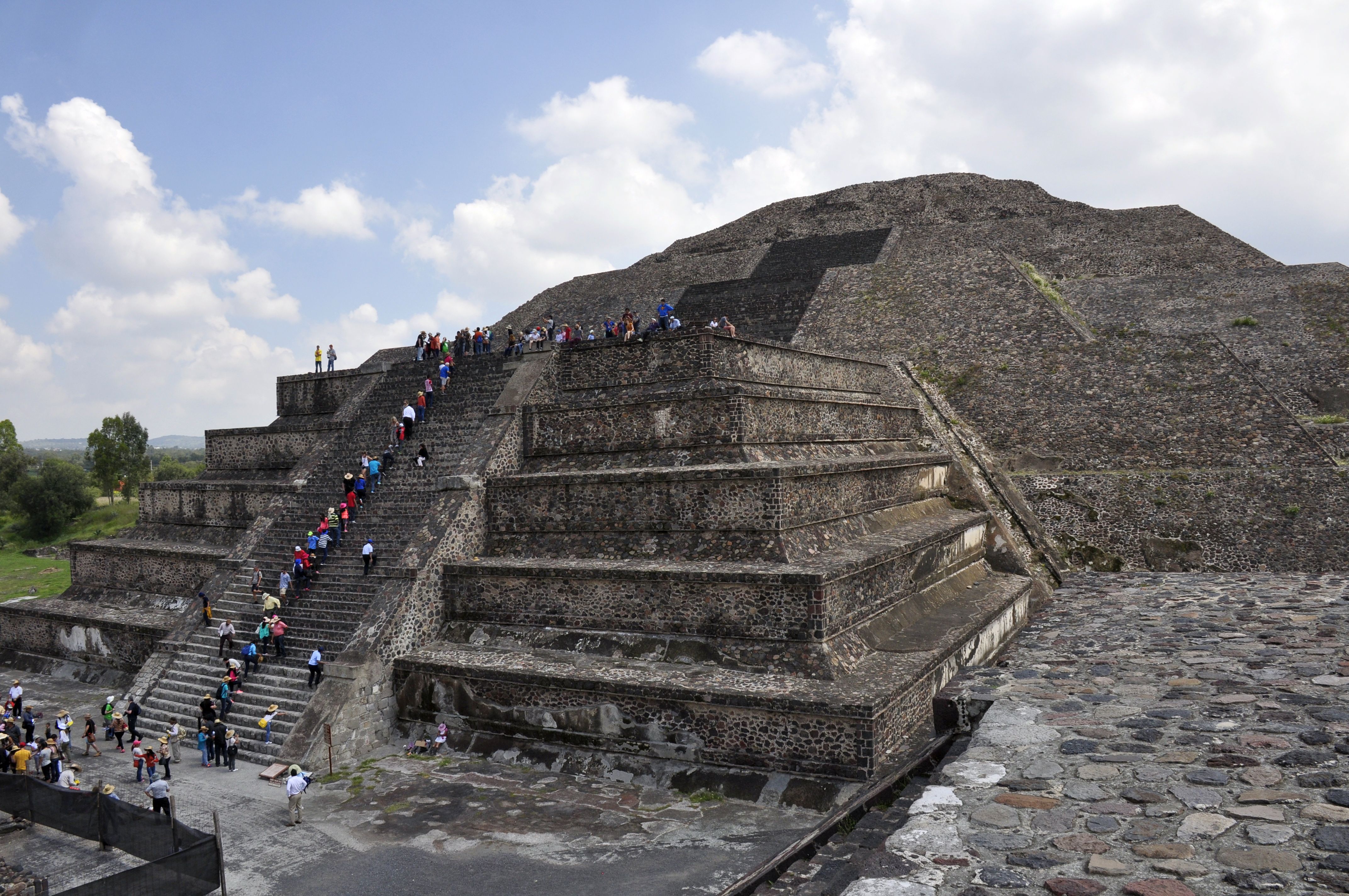
Teotihuacán is a vast ancient metropolis northeast of Mexico City, not a conventional theme park where a ticket gives access to every staircase. INAH's 2026 guidance explicitly prohibits climbing the Pyramid of the Sun; the agency also announced a closure of access to the Pyramid of the Moon pending further notice after reopening the archaeological zone in April. Photographs showing crowds atop ancient monuments may be historic and no longer illustrate permitted activities.
A visit is therefore about understanding the Avenue of the Dead, major plazas, surviving murals and associated museums, not purchasing the right to summit a pyramid. Visitors who dislike climbing can still experience extraordinary monument scale from ground level. Choose the official open walking routes and never cross conservation barriers because a reseller advertises a 'pyramid-climbing day'.
International visitors and Mexico residents pay different admission
The current INAH Teotihuacán visitor portal lists general international admission at MXN 210. Mexican nationals and foreigners legally resident in Mexico with an acceptable current government ID receive the MXN 105 category, while qualifying Mexican nationals and documented residents can visit without archaeological admission on Sundays. These rights depend on evidence of status, not simply being able to speak Spanish.
As a simple example, two nonresident international adults pay MXN 420 to INAH for the site, while two appropriately documented residents pay MXN 210 under the listed half-rate. Some national exemptions for older visitors, under-13s, students and teachers also have specific documentation conditions. Do not assume the same exemptions apply to every foreign tourist with a university card. A transport guide, balloon flight or lunch is not included in this ticket.
The most useful budget route leaves from Terminal del Norte
INAH identifies Mexico City's Terminal de Autobuses del Norte as the starting point for public bus services to Teotihuacán. This is a proper long-distance bus terminal, not a random stop outside the city centre. From a Mexico City hotel, first check your safe route to Terminal del Norte, then find a service clearly marked for the archaeological zone and confirm the return departure and boarding location with the carrier before travelling.
A February 2026 independent traveller described worry when their bus stopped at Potrero to pick up passengers on the way to the pyramids; other travellers explained that an ordinary public bus can make such stops. That is useful reassurance, but it does not verify the schedule or security of every service. Keep tickets and small change ready, pay the actual operator, and avoid trusting a hand-written promise of a departure time.
What you save versus a guided day trip
A public bus and standard INAH admission typically allow a capable independent traveller to explore on their own schedule, with total transport cost varying by operator and date. A genuine small-group tour may add central-area pickup, a knowledgeable historical guide and fewer station decisions; it can also add artisan-store visits, lunch options or a balloon experience you did not ask for.
Read the full inclusion list: entry ticket paid separately or included, actual archaeological guiding time, any stop at the Basilica of Guadalupe, whether meals are compulsory, and the precise hotel pickup zone. A cheap tour may cost more after adding MXN 210 admission, while a premium photo tour may have a very different goal. We do not present a particular tour's current availability as verified.
Use the INAH route maps, not a four-pyramid checklist
The operator publishes several distinctive routes: a short 'Quick Trail' of about 2 km for a 45–90-minute introduction; a more gradual family itinerary around 1.5 km and roughly 1.5–2 hours; and an Explorer trail spanning about 5–6 km and 4–5 hours. These are recommended visitor routes, not a promise that every museum or structure will always be open.
If archaeology interests you, the longer route links the Citadel, Temple of the Feathered Serpent, Avenue of the Dead, plazas, mural sites and museums. If travelling with a stroller or an older family member, use the separate official Accessible Trail as the starting point. The names and gate numbers help you choose where to enter and leave rather than retracing long exposed avenues under hot sun.
Timing, altitude and heat matter more than souvenir shopping
The zone's standard hours are 08:00–17:00 daily, with last entry 16:30. INAH recommends allowing 3–5 hours for a normal visit and notes that the hottest hours of the day can run roughly 11:30–15:30. Mexico City and Teotihuacán are at altitude, so sun exposure and exertion are real considerations even when morning air feels cool.
Aim to enter near opening if you value less heat and enough time for the museums. Bring a hat, sun protection, water and comfortable walking shoes; check whether particular items may enter protected zones. The protected area bans pets, bicycles, unauthorised drones, touching structures and bringing food into designated areas. Leave time to return to the correct gate and bus rather than exploring until minutes before closing.
The conservation closure that old videos miss
In April 2026 INAH announced that Teotihuacán was reopening with strengthened safety procedures and that access to the Pyramid of the Moon would remain closed until further notice. Its official general-visit page separately confirms that climbing the Sun Pyramid is prohibited. Some individual monument-description pages still describe an elevated perspective, so dated operational notices and posted barriers should take precedence over descriptive text or old travel vlogs.
A legitimate official guide can still teach visitors about solar and astronomical alignment and show the monumental form from the surrounding plazas. Archaeological restrictions protect both people and the site; no group guide can sell a lawful exception through an unverified commercial listing. Use operator notices close to departure when choosing between a balloon ride, distant panoramic photos and a ground-level archaeology visit.
How actual visitors describe the independent trip
In a February 2026 MexicoTravel discussion, a passenger from Terminal del Norte asked whether intermediate stops meant they were on the wrong bus. Other respondents confirmed that services can pick up additional passengers en route and mentioned a journey closer to ninety minutes under their conditions. Their messages illustrate a common first-time anxiety, not a universal timetable or a guarantee of no traffic.
Some experienced travellers recommend a guide to appreciate the city's history; others are content with the museums and official trail map. The honest choice depends on the amount of interpretation you want. Calling a bus tour 'the only safe way' or promising all travellers can reach the site in a fixed hour would overstate the available evidence.
Planning with children, less-mobile companions and photo enthusiasts
The site's official accessible route makes it possible to plan monument views and selected museums without climbing enormous stairs. Wheelchair suitability varies with path surface, weather and temporary work; read the operator map rather than assuming every 5 km loop is level. Younger children may enjoy the monumental plazas but tire quickly on exposed routes, so a shorter itinerary and a cooler start are often more worthwhile than many stops.
Professional cameras, tripods, lighting and commercial filming may be subject to permits even though normal personal photography is permitted without extra charge. Balloon excursions are operated separately outside the archaeological admission and have weather restrictions; don't assume an early-flight ticket allows landing within the ruins. Official museum opening hours may differ from the archaeological zone's gate hours.
2026 decision checklist for Mexico City visitors
Confirm your actual INAH price category: international MXN 210 or documented Mexican-national/resident MXN 105 and eligible Sunday free access; check 08:00–17:00 hours and 16:30 last entry; choose a 2 km short route or 5–6 km full exploration; verify bus departures from Terminal del Norte and the return boarding gate; and remove any pyramid-climbing promise from the itinerary.
Official INAH guidance and its April 2026 operational notice were verified on 14 October 2026. Actual buses, prices, conservation restrictions and weather can change. Traveller forum experiences are anecdotes only and no claimed first-hand visit or guaranteed tour slot appears in this independently researched guide.
Verify with official sources
Verify admission conditions, route changes, closures, prices and eligibility with the current providers. Editorial links are references; affiliate links above are labeled separately.
INAH 2026 official site rules, hours, MXN 105/210 visitor categories and bus accessINAH April 2026 reopening notice with Pyramid of Moon closureINAH official Quick, Family, Explorer and Accessible trail mapsINAH archaeological zone official full guideReal visitor bus-trip discussion, February 2026 (anecdotal)