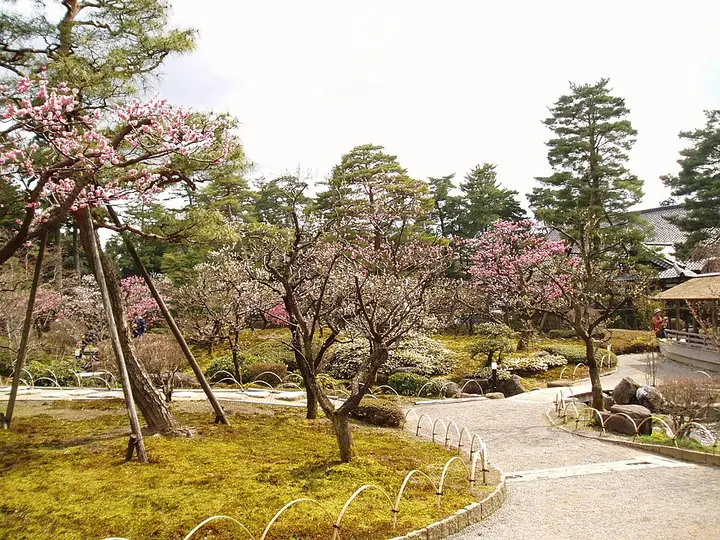
Kanazawa deserves a stay, not just a platform change
Kanazawa on Japan's Sea of Japan coast is a compact castle city with the landscaped Kenrokuen Garden, former samurai streets, wooden chaya districts, seafood markets and contemporary art. It makes an excellent stop between major cities, but the ideal visit depends on whether you want historic neighborhoods, museums or a side trip to Shirakawa-go.
A single full day can cover several central highlights with sensible routing. Trying to add Shirakawa-go as well turns the experience into a long bus day and leaves less time for Kanazawa itself. With one night, you can explore the city on one day and reserve the next for the mountain village or a craft experience.
From Tokyo: direct Hokuriku Shinkansen to Kanazawa
From Tokyo Station, Hokuriku Shinkansen trains reach Kanazawa without requiring the Kyoto–Osaka side of the journey. Train types and stops vary; choose the right service and reserve seats if you need to arrive at a specific time. On a round trip from Tokyo, the rail cost and total hours can make a same-day visit much less efficient than adding Kanazawa to a longer Japan itinerary.
Start your city visit at Kanazawa Station's east-side Kenrokuen Exit, known for the Tsuzumi-mon gate and Motenashi Dome. Keep a little time for orientation before setting off, especially if you are switching to a local bus. The station is also the main departure point for many guided excursions to Shirakawa-go.
From Kyoto or Osaka: do not miss the Tsuruga transfer
The current principal rail route from Kyoto and Osaka to Kanazawa is not one uninterrupted Thunderbird train. Ride the Limited Express Thunderbird to Tsuruga, transfer to the Hokuriku Shinkansen and continue to Kanazawa. Official Kanazawa tourism guidance shows roughly 45 minutes Kyoto–Tsuruga plus about an hour onward; from Osaka it shows approximately 1 hour 20 minutes to Tsuruga and a further 40 minutes by Shinkansen.
Buy a journey covering the connection rather than assuming an old pre-extension 'direct Kyoto–Kanazawa Thunderbird' article remains accurate. Allow time for the transfer, especially with luggage or children, and check railway disruptions during heavy snow. Highway buses exist but take substantially longer; they are not a like-for-like comparison for a short city break.
Local transport: walk, use the Kanazawa Loop Bus or take a taxi
The central historic districts lie fairly close together around Kanazawa Castle, but the station sits outside the compact sightseeing core. The Kanazawa Loop Bus from the station's east side serves Omicho Market, Higashi Chaya, Kenrokuen and the 21st Century Museum. The official tourist site lists a regular adult loop-bus fare of ¥220 per ride, with different clockwise and anticlockwise circuits.
For a family or a rainy day, combine bus rides with short walks and occasional taxis rather than repeatedly crossing the city. A day pass may pay off with multiple boardings, but verify the current pass price and eligible operators before purchase. Kanazawa has frequent rain and winter snow; wet shoes and umbrellas matter as much as the exact sightseeing order.
Morning route: Omicho Market to Kenrokuen and the castle
Start at Omicho Market for seafood and a glimpse of local produce. It is a working market as well as a visitor destination; browsing does not require a guided tour, but restaurants and specialty food have their own charges. Try kaisendon seafood bowls if that suits your budget, or select a smaller snack and save lunch for a quieter neighborhood.
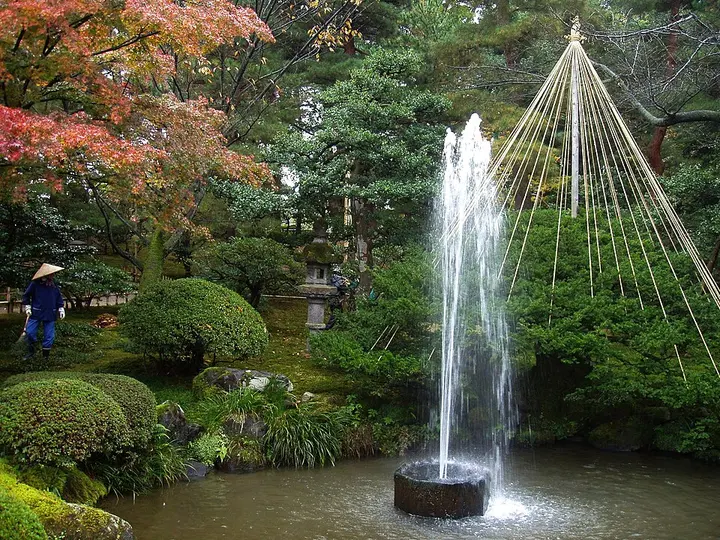
Continue toward Kanazawa Castle Park and Kenrokuen Garden, where ponds, pines and carefully designed views reward an unhurried visit. Garden admission and seasonal hours should be checked on the official website. The castle grounds and individual restored buildings may have different access rules, so do not assume every structure is covered by one admission.
Afternoon: Higashi Chaya, Nagamachi or contemporary art
Higashi Chaya's narrow lanes and wooden facades preserve the atmosphere of a historic entertainment district. Some teahouses and craft shops are open to visitors, but many properties are private or active businesses. If you want a sweets or gold-leaf craft experience, check whether the session requires advance booking rather than expecting all shops to accept walk-ins.
Alternatively choose Nagamachi for preserved samurai streets and earthen walls, or the 21st Century Museum of Contemporary Art for a very different afternoon. Trying to see all three well in the final two hours usually leads to disappointment. Keep one area as your priority and treat the other as a bonus if the weather, opening times and your energy permit.
A practical eight-hour schedule
One workable first-time route is: Kanazawa Station in the morning, Omicho Market for breakfast or early lunch, Kenrokuen and the castle around midday, then Higashi Chaya in the afternoon. End with Nagamachi or museum time if the opening hours fit. Official Visit Kanazawa publishes an approximately eight-hour introductory itinerary, and this guide adapts its logic to leave you more flexibility.
For an overnight stay, spend the evening sampling regional cuisine rather than adding another long transfer. Look for jibuni, local seafood or seasonal Kaga dishes, allowing dietary preferences and opening hours to determine the restaurant. Staying near the station is practical for an early Shirakawa-go bus; staying around Korinbo can be more convenient for late walks and dining.
Shirakawa-go: another day, not a casual city neighborhood
The UNESCO-listed mountain village of Shirakawa-go is outside Kanazawa and has no rail station of its own. Official travel guidance puts the highway bus journey from Kanazawa at roughly 1 hour 15 minutes, with connections onward toward Takayama. Some departures require reservations, and mountain weather can disrupt road services. Do not head to Kanazawa Station assuming that every bus has last-minute space.
Visiting Shirakawa-go can be a worthwhile separate day with time to walk among gassho-zukuri farmhouses, appreciate the valley and avoid crowding residential entrances. If using a guide, compare a focused village-only morning tour against full-day programs that combine it with Kenrokuen and crafts. If you have only one night in the region, be realistic about the trade-off.
Independent exploring versus a private walking tour
Kanazawa is unusually approachable independently because its central sights are compact and the loop bus is straightforward. A local walking guide adds contextual detail to castle-town history, geisha culture and craft traditions; one GetYourGuide listing offers a customizable private three-to-four-hour route choosing three sites, with walking pickup near local hotels. It is not transportation from Tokyo or a Shirakawa-go coach.
Compare the price of a private guide with the cost of independent buses and admissions, then ask what the booking explicitly includes. A guide may be worthwhile for a small group interested in history, while solo visitors with flexible time can often explore at lower cost using the official walking itineraries. Always check any extra entrance fees and cancellation conditions.
Before booking: rails, gardens, seasons and family needs
Verify current Tokyo or Tsuruga-route rail times, reserved-seat requirements, weather alerts and bus departures before buying nonrefundable activities. Check Kenrokuen opening times and access restrictions at temples or private houses. Snow can make the city beautiful but slows walking, and the shoulder seasons can be wet; allow buffer time for the station transfer on departure day.
If traveling with a stroller, older adults or luggage, use the relatively compact city center to plan fewer long walks rather than forcing the entire classic route. For Shirakawa-go, confirm the meeting point, reserved seat and last feasible return service. The best Kanazawa itinerary is the one that lets you spend time in its neighborhoods—not simply collect location names.
Verify with official sources
Verify admission conditions, route changes, closures, prices and eligibility with the current providers. Editorial links are references; affiliate links above are labeled separately.
Visit Kanazawa — Getting to Kanazawa from Tokyo, Kyoto and OsakaVisit Kanazawa — Getting around KanazawaVisit Kanazawa — Official one-day itineraryVisit Kanazawa — Official historic districts itinerary